EQ IS COACHABLE
What You Are Doing Is Impacting How The Buyer Feels In Every Interaction
The Foundation: What You Can Control
You can't control your buyer. But you can absolutely control what you are doing that is impacting how the buyer feels during every interaction with your team.
Research consistently shows that buyers make decisions based on how they feel — not just what they're told. Specifically, three feelings drive buyer trust and forward momentum:
Safe
The buyer trusts what you say and trusts you will do what you commit to.
Heard
The buyer believes their words, concerns, and time genuinely matter to you.
Understood
The buyer feels you truly get what is important to them — not just what they said.
This guide explains what each feeling requires from your sellers — and where they most commonly fall short.
Making Buyers Feel Safe
Safety is the foundation. Without it, buyers stay guarded, withhold information, and disengage. Think of it like being a great host — the behaviors that make a guest feel welcome are the same ones that make a buyer feel safe.
The Basics: Be A Good Host
Start and end on time — it signals respect
Share a clear agenda upfront — it removes uncertainty
Learn and correctly pronounce the buyer's name before the call
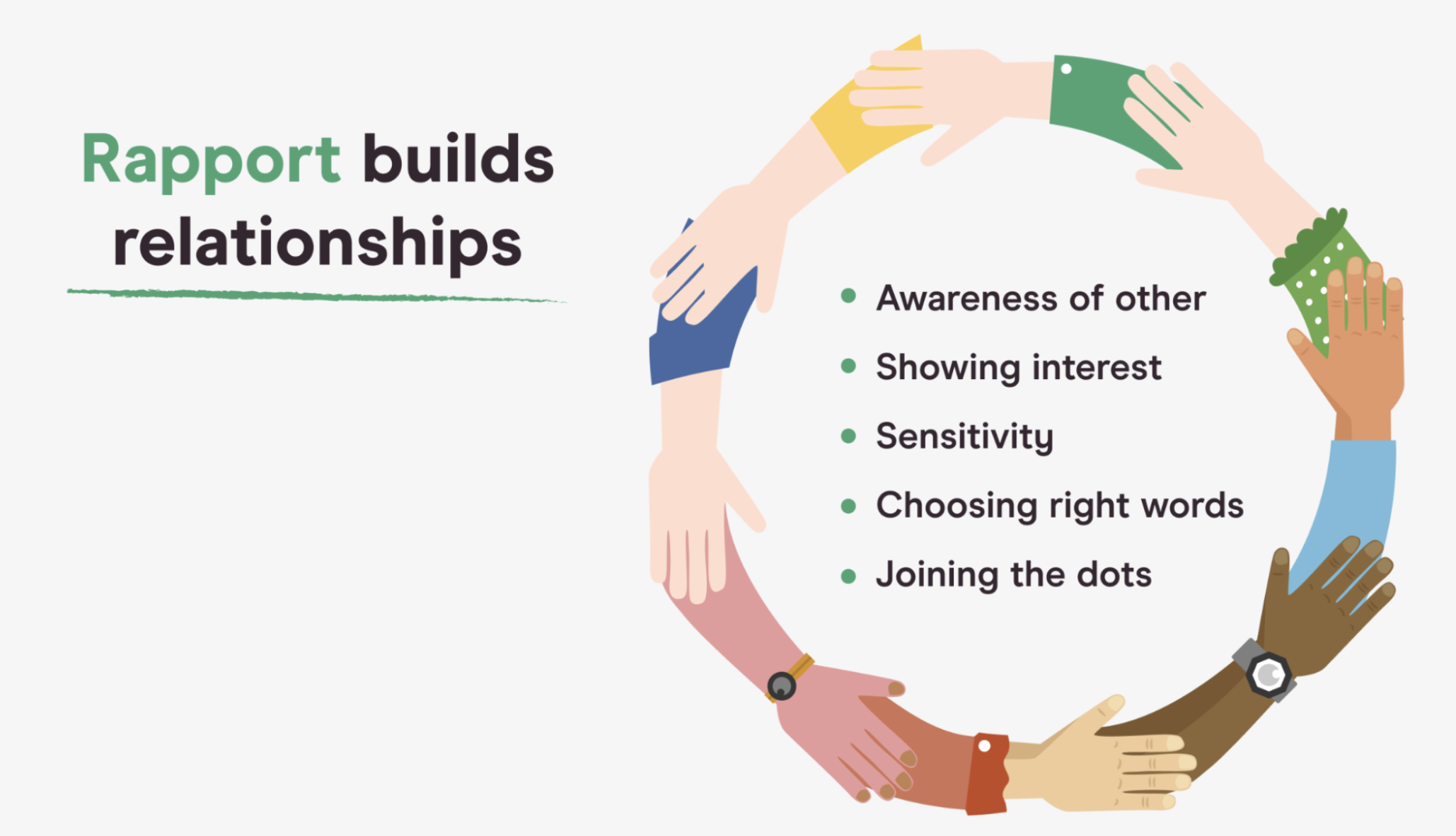
Build rapport around genuine common interests
Match your speaking pace to theirs — fast talkers feel unheard by slow speakers, and vice versa
Check in throughout the call — don't just deliver a monologue
Trust What You Say
Buyers need to believe your words are honest before they'll believe your pitch. The behaviors that build this are counterintuitive — but powerful:
Admit when you don't know something — say you'll find out and follow up
Share information that isn't favorable to your solution when it's true
Back up claims with evidence, references, or corroboration
It feels like admitting a gap loses the deal. Sometimes it does. But losing a deal because your solution wasn't the right fit is acceptable. Losing a deal because the buyer felt you were dishonest is not — they will never buy from you again, and they will tell others.
Trust What You'll Do
Following through on small commitments is one of the most underrated trust-builders in sales:
Send every follow-up email you promised, when you said you would
Honor every agreement made in the meeting — no exceptions
Write commitments down during the call so nothing slips
Coaching Tips for Managers
Review follow-through rates with your reps. How many follow-up emails are sent the same day vs. 48+ hours later? Delayed or missed follow-ups are the #1 silent deal killer.
Making Buyers Feel Heard
Most buyers can't tell whether a seller is actually listening. So they rely on behavioral signals. Your reps may believe they're listening — but what the buyer observes tells a different story.
Behaviors That Signal You Are NOT Listening
Interrupting before the buyer finishes their thought
Never pausing — launching straight into your next point
Multitasking visibly — typing, looking away, checking your phone
Dominating the call so the buyer rarely gets a chance to speak
Behaviors That Signal You ARE Listening — Active Listening
Making consistent eye contact and nodding to show engagement
Staying off other screens during the call
Pausing after the buyer speaks before responding — giving them space
Repeating back what they said using some of their own words
Following up with a relevant question that proves you heard them
Most reps treat listening as waiting for their turn to talk. Active listening means genuinely trying to understand what the buyer is saying before deciding what to say next. This one shift changes the entire dynamic of a sales call.
Common Mistake: Too Much Content, Not Enough Listening
Sales calls often feel content-heavy because reps believe they need to cover everything. The result: buyers feel talked at, not heard. Coach your reps to ask one question, then listen fully before moving forward. Silence is not a problem to solve — it is space for the buyer to share.
Making Buyers Feel Understood
This is the highest-order need — and the rarest skill. A buyer cannot feel understood without first feeling safe and heard. Which means this moment only becomes available to sellers who have already delivered on the first two.
What Feeling Understood Requires: Empathy and Validation
Validation is the act of acknowledging the emotion or importance behind what someone said — not just the content of the words. It means showing the buyer that you understand what this means to them, not just what they told you.
How to Validate
Name the emotion: "I can hear this has been really stressful for your team."
Name the importance: "I hear that this is a top priority for you going into Q3."
Then pause — give them space to add more
If they don't fill the silence, invite them: "Tell me more about that."
The Mistake that Kills the Moment
What Reps Typically Do
"We hear this all the time — here's how we solved it for Company X..."
Jump straight to a solution or case study
Respond to the content of what was said
What They Should Do Instead
"I can hear this is really important to you. Tell me more about what that's been like."
Acknowledge the emotion first, then invite them to share more
Respond to what it means to them
This Is The Magic Moment In a Sales Conversation:
When a buyer discloses what truly matters to them, they are extending trust. A rep who responds with empathy builds a champion. A rep who responds with content misses the moment — and may never get it back.
How Nayak Helps Your Team Do This Consistently
These behaviors are coachable. But coaching them manually — call by call, rep by rep — is nearly impossible at scale.
Nayak listens to every call in real time and coaches sellers in the moment: when to pause, when to validate, when to stop talking and start listening. It identifies the exact moment a buyer needs to feel safe, heard, or understood — and prompts the rep with what to say or do next.
Quick Reference: Behaviors by Feeling
Feeling
Key Behaviors
Common Failure Mode
Safe
Agenda, punctuality, honesty, follow-through
Overselling, missed follow-ups, vague answers
Heard
Active listening, pausing, mirroring their words
Interrupting, dominating the call, multitasking
Understood
Validation, naming emotions, inviting disclosure
Jumping to solutions, sharing case studies too early